
Invisalign vs. Bite Problems: Can Aligners Fix My Smile?
June 22, 2026
If you’ve noticed that your bite feels “off”—whether your top and bottom teeth don’t line up properly, your jaw feels strained, or your teeth don’t meet evenly when you close your mouth—you’re not alone. Bite issues are very common, and they can affect everything from chewing comfort to long-term dental health.
One of the most frequently asked questions from patients is whether Invisalign can correct these kinds of concerns. The short answer is yes, Invisalign can fix many bite problems—but not all cases are the same, and results depend on the complexity of the alignment issue.
What Types of Bite Problems Can Invisalign Treat?
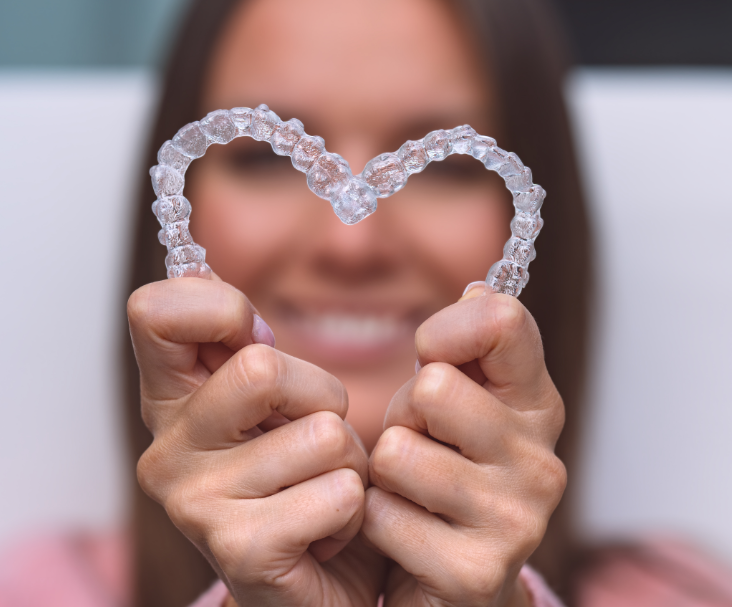
Invisalign is designed to gradually move teeth into better alignment using a series of clear, custom-made aligners. Over time, this controlled movement can improve both cosmetic appearance and functional bite relationships.
In many mild to moderate cases, Invisalign can effectively treat issues such as overbites, underbites, crossbites, and open bites. It can also help with crowded or spaced teeth that contribute to bite imbalance.
An overbite, for example, occurs when the upper front teeth overlap the lower teeth too much. Invisalign can gradually shift the teeth and jaw positioning to reduce this overlap, improving both function and appearance.
Similarly, underbites and crossbites can often be improved by carefully guiding teeth into more balanced positions. These changes may also help reduce uneven wear on teeth and improve chewing efficiency.
How Invisalign Works to Correct Alignment
Invisalign treatment begins with a digital scan of your teeth, which is used to create a customized treatment plan. This plan maps out how each tooth will move over time.
You’ll receive a series of aligners that are worn for about one to two weeks each. Each set applies gentle pressure to specific teeth, gradually guiding them into improved alignment.
For bite correction, additional features like small attachments or elastics may be used to help achieve more complex movements. These tools allow Invisalign to address not just cosmetic alignment, but functional bite relationships as well.
The key to success is consistency. Aligners need to be worn for about 20 to 22 hours per day to achieve predictable results.
When Invisalign May Not Be Enough
While Invisalign is highly effective for many bite issues, there are limitations.
Severe skeletal bite problems—where the jaw structure itself is significantly misaligned—may require traditional braces, orthodontic appliances, or even surgical intervention in some cases.
That’s why a professional evaluation is essential. Your dentist or orthodontist will assess whether Invisalign alone can achieve the desired correction or whether a different approach is needed.
Even in more complex cases, Invisalign is sometimes used as part of a broader treatment plan.
Benefits Beyond Bite Correction
Correcting bite issues isn’t just about aesthetics. A properly aligned bite can reduce uneven tooth wear, improve chewing function, and help prevent jaw discomfort.
Many patients also appreciate the discreet nature of Invisalign. Because the aligners are clear and removable, they fit more seamlessly into daily life compared to traditional braces.
Over time, these small adjustments can lead to meaningful improvements in both oral health and confidence.
If you’ve been wondering whether your bite issues can be improved, Invisalign may be worth exploring with your dental provider.
About the Practice
Dr. Shtarkman and Dr. Salib of Advanced Dental Center in Parma Heights provides comprehensive orthodontic and cosmetic dental care focused on creating healthy, balanced, and confident smiles. Ourr team offers Invisalign treatment and other orthodontic solutions tailored to each patient’s bite and alignment needs. Start feeling confident in your smile again with our help!
Call us at (440) 885-5354 or schedule your appointment online.
No Comments
No comments yet.
RSS feed for comments on this post.
Sorry, the comment form is closed at this time.